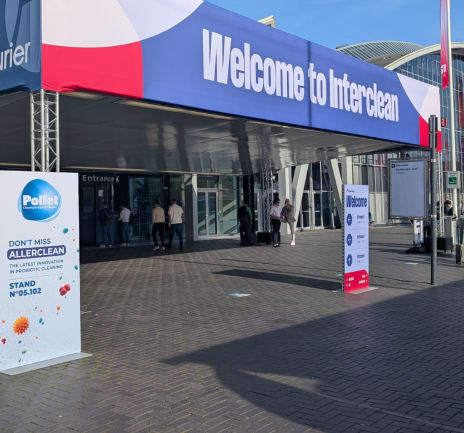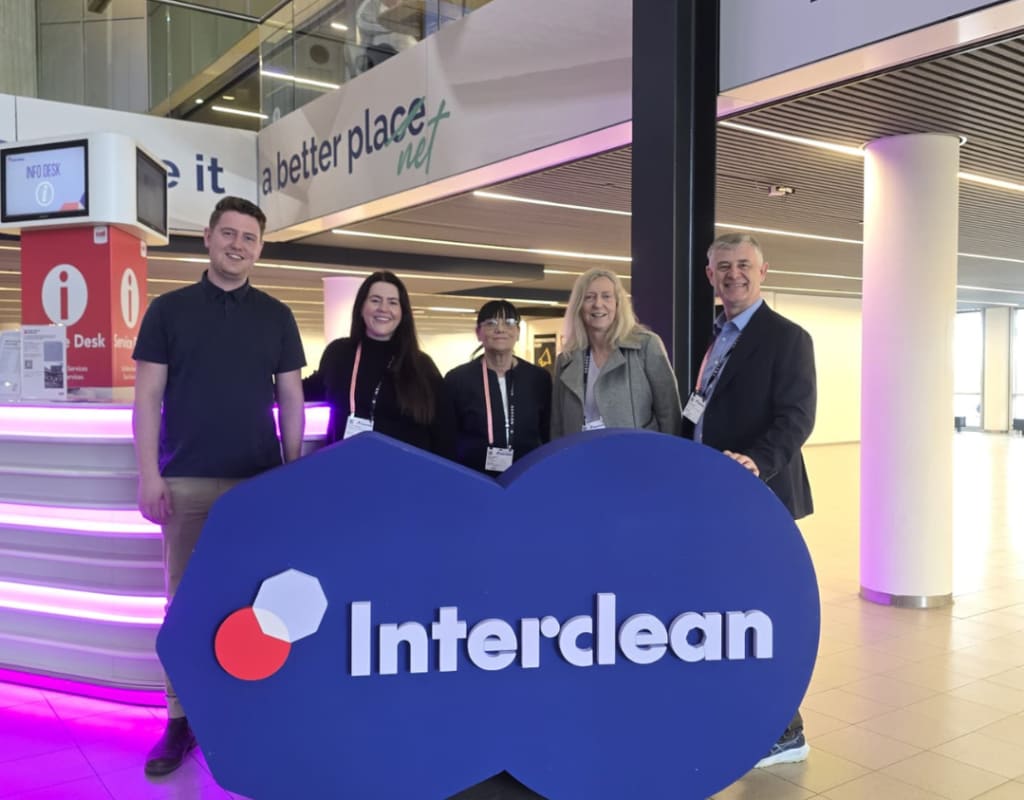

Our recent visit to Interclean gave us a valuable look at what’s next for the cleaning industry.
There is no shortage of innovation. From robotics to specialist equipment, it’s clear that technology is playing an increasingly important role. But as always, the question is not just what’s new. It’s what works.
Here are some of my key takeaways.
Robotics
Robotics was one of the biggest talking points across the event.
There is no doubt that the technology is advancing, and there are clear benefits in terms of consistency and automation. However, from what we saw, there are still some practical challenges to overcome.
Speed is one. Many of the machines are currently too slow for busy environments. We also noticed that they can quite literally cut corners, which impacts overall finish.
Cost is another factor. The initial investment is high, and ongoing costs such as batteries add up quickly. Charging infrastructure also needs to be considered, particularly across larger or more complex sites.
Most importantly, something is missing. The human touch.
Cleaning is not just about process. It’s about awareness, responsiveness and going above and beyond when needed. One of our supervisors often runs out to grab milk for the office team she works with. It’s a small thing, but it says a lot about the relationship and level of service.
That is something technology cannot replicate.
Specialist Equipment
Alongside robotics, we saw some strong developments in specialist cleaning equipment.
One standout was a new product from i-mop designed specifically for clean room environments. We had the opportunity to speak directly with the engineer behind it, which gave us real insight into how it works and why it has been developed.
The machine includes features such as an additional squeegee, air filtration and anti-static components, all designed to meet the demands of controlled environments. It also uses chlorine-based cleaning solutions rather than peroxide, and incorporates FKM wheels that are resistant to graphite, a common by-product in certain industries.
This level of detail shows how equipment is becoming more targeted and tailored to specific environments, rather than a one-size-fits-all approach.
Drone Cleaning
We also saw drone window cleaning in action.
It’s an impressive concept and certainly one of the more eye-catching developments at the event. However, it does raise some practical questions.
One of the main concerns for us was water usage. Compared to more traditional methods, the volume of water required appeared significantly higher, which raises questions around sustainability and efficiency.
As with many new technologies, it will be interesting to see how this evolves and whether these challenges can be addressed over time.
Lightweight Equipment
Another area of development is smaller, more lightweight equipment, particularly for confined spaces such as washrooms.
We saw a scrubber dryer designed specifically for toilet areas. It was compact and easy to manoeuvre, which is a clear advantage in tighter environments.
However, battery life was limited, which could impact its practicality on larger sites or across longer shifts.
As always, it comes back to balance. The right tool for the right environment.
Looking Ahead
Interclean reinforced that the future of cleaning is changing quickly.
Technology will continue to play a bigger role, and there are some genuinely exciting developments coming through. At the same time, it is important to stay grounded in what actually works day to day.
For us, it is about combining innovation with experience. Understanding where new technology can add value, while maintaining the standards, reliability and personal service that our clients expect.
The future is exciting. But it also needs to be practical.
And that balance is where the real opportunity lies.